


“Everything Has to Rebirth From Itself”
Co-written by our very own Kristin Collins
If your Explore page looks anything like mine, you’ve probably been seeing all the buzz since Friday about Jonathan Anderson’s debut collection for Dior, shown at the Hôtel des Invalides in Paris. Formerly the Creative Director at Loewe—and still at the helm of his own label, JW Anderson—he’s known for blending concept and craftsmanship in ways that feel more like a manifesto than a mere menswear collection. His work treats fashion not as fleeting trend, but as a form of historical dialogue. As he put it in a recent interview, he’s not just designing clothes; he’s designing a conversation with the past.
Now leading Dior’s men’s, women’s, and couture lines—while still designing for JW Anderson and continuing his collaboration with Uniqlo—Anderson has taken on an immense creative load. But what makes his appointment so compelling isn’t just his vision; it’s his deep fluency in art, history, and material culture (at least for us). He’s cited Chardin and Chippendale in a single show, pulled silhouettes from the 18th century, and drawn structural inspiration from museum archives like The Met. His affinity for old-world craftsmanship and archival research makes him a natural fit for Dior.
Anderson also makes it clear that being at Dior isn’t about putting himself center stage—it’s about reimagining the house through the lens of Monsieur Dior’s legacy. His approach is one of thoughtful homage, honoring the brand’s codes while pushing its language into the future. He stated that he has a vision for at least five collections that reference specific elements of Christian Dior’s design ethos. And I for one cannot wait to see what’s next!


The Venue as Art
Anderson’s Dior debut took place at Les Invalides, a Parisian complex tied to French military history. The entrance featured a stretched black-and-white print of Christian Dior’s original salon. Inside, the set design mimicked the velvet-lined rooms of the Gemäldegalerie in Berlin, a museum of Old Masters (as Anderson stated he considered Christian Dior himself an “old master).
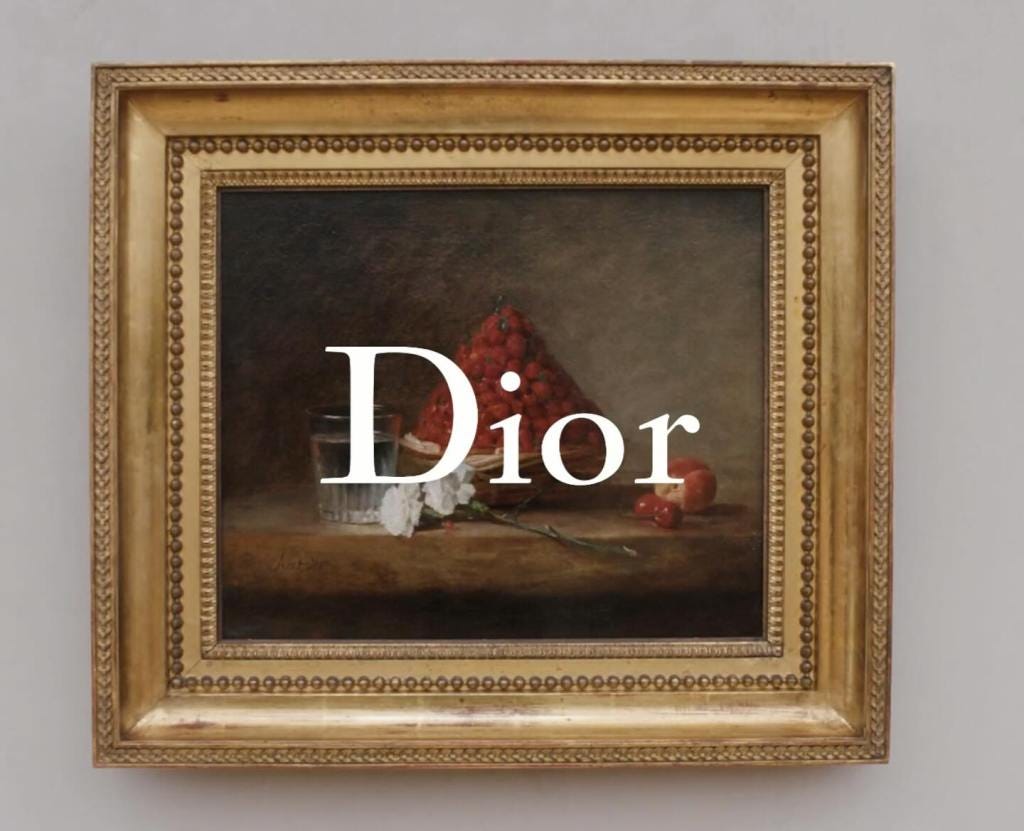
At either end of the runway hung two Chardin paintings (emphasis on original artwork borrowed from museums!):
Basket of Wild Strawberries (1761, The Louvre)
A Vase of Flowers (c.1750, National Galleries Scotland)
Though Chardin lived in the Rococo period, his quiet focus on domestic scenes and humble objects stood apart from the excess the period is defined by (think Fragonard and Marie Antoinette). His presence set the tone: observation, stillness, and reverence for form.
Christian Dior’s love for the 18th Century
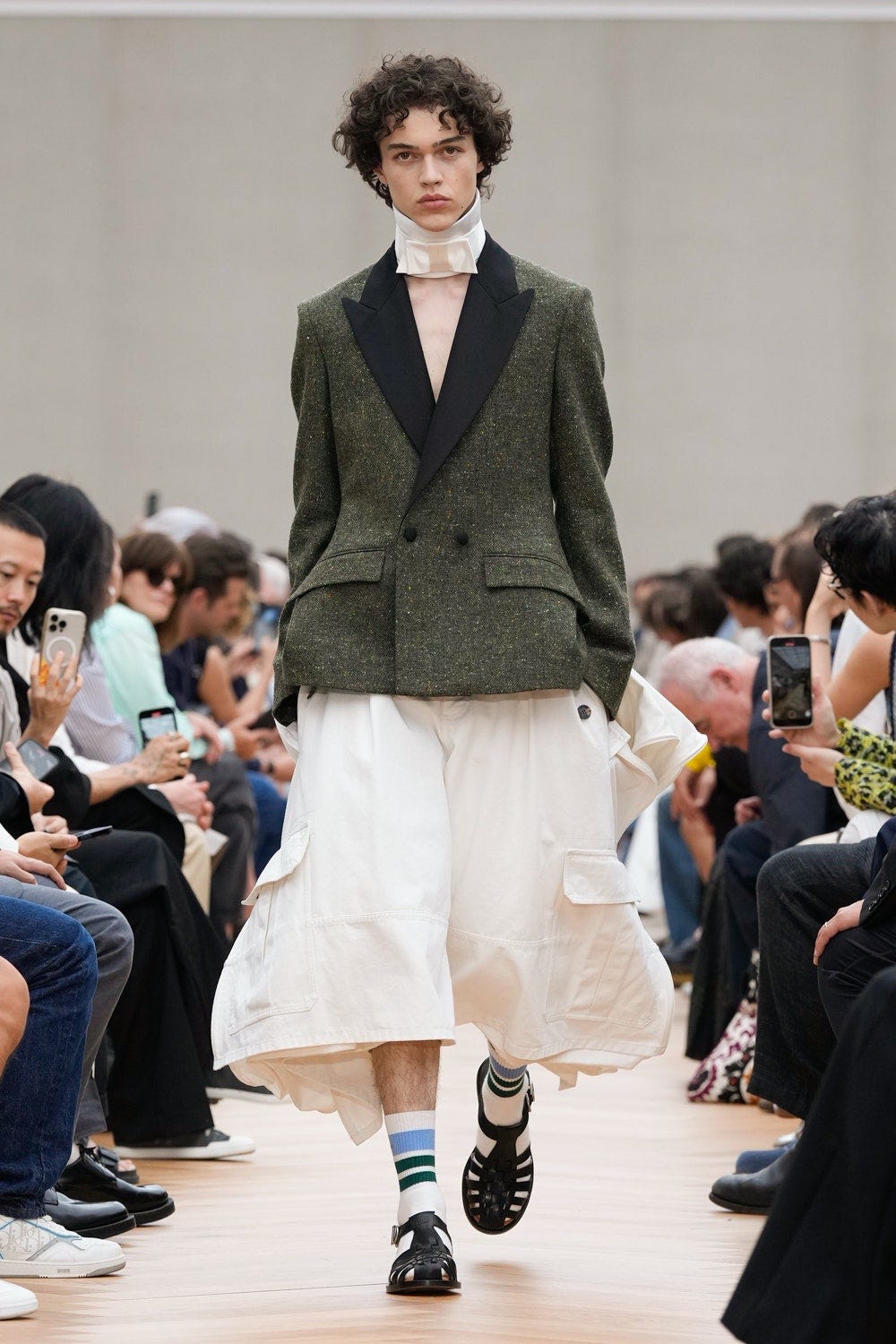
Christian Dior famously loved the 18th century. Anderson (the first person to take over both Menswear and Womenswear since CD himself) very clearly pays homage to this aesthetic. The collection draws from the silhouettes and decorative flourishes of 18th-century menswear: frogged frock coats, elaborate waistcoats, and ornate embroideries appear throughout the pieces. He updated historical shapes and materials as reinterpretations. It feels less like a seasonal launch and more like a curated museum installation. Here is a great comparison of details on Instagram. And he clearly referenced pieces that catapulted Dior to fame during his life time, like the iconic Bar jacket and Delft dress - you can see both of those references in the look below:
Nods to Art History Before the Show
One of the most poignant artistic choices was the show invitation: a trompe-l’œil ceramic plate, based on a piece Anderson found in the Dior archives. Trompe-l’œil, meaning “deceive the eye,” is a technique from classical painting that blurs illusion and materiality. It’s a fitting metaphor for the entire collection. Anderson isn’t making references; he’s building illusions of continuity. He was also inspired by one of his favorite painters, Lucian Freud - see below:


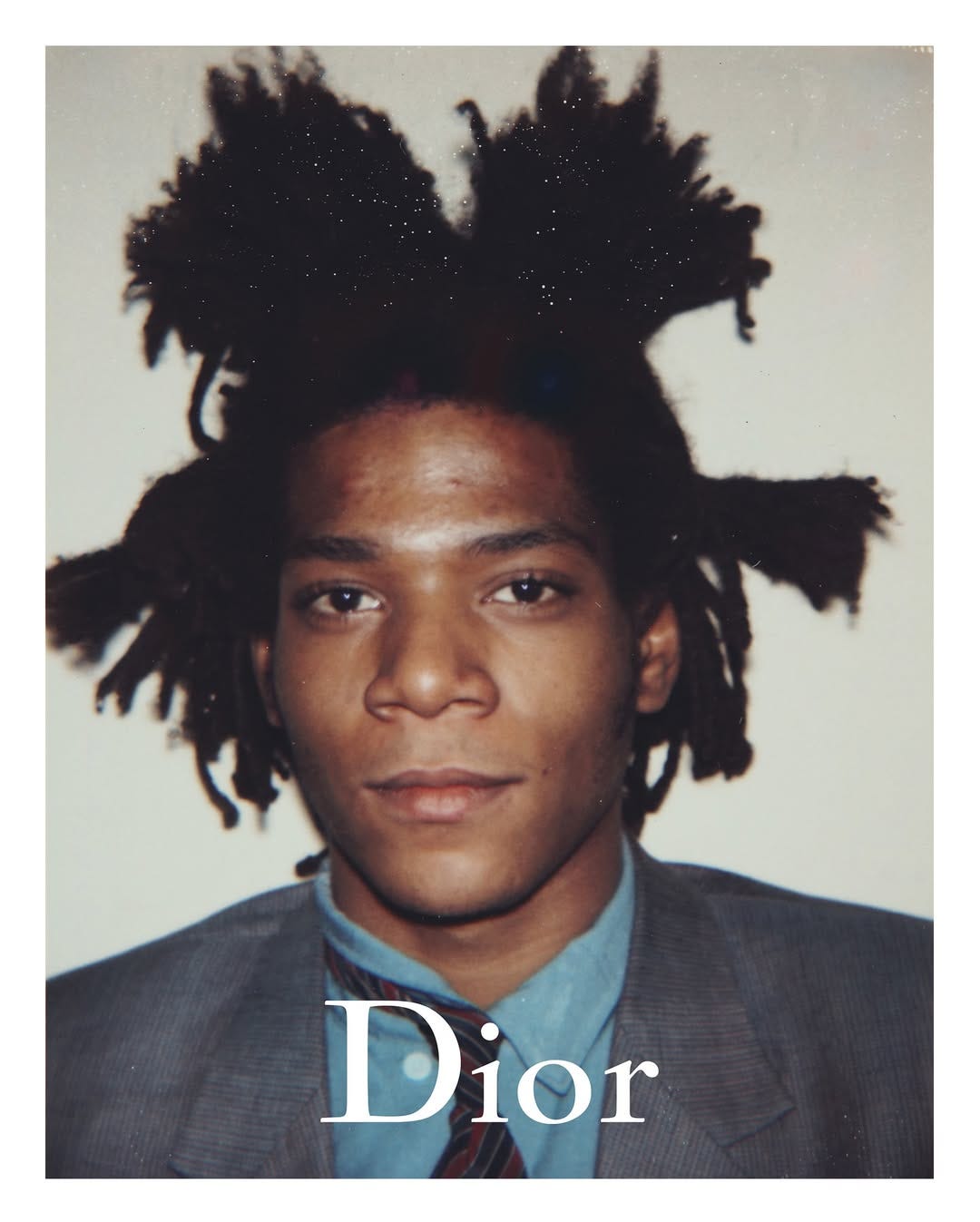
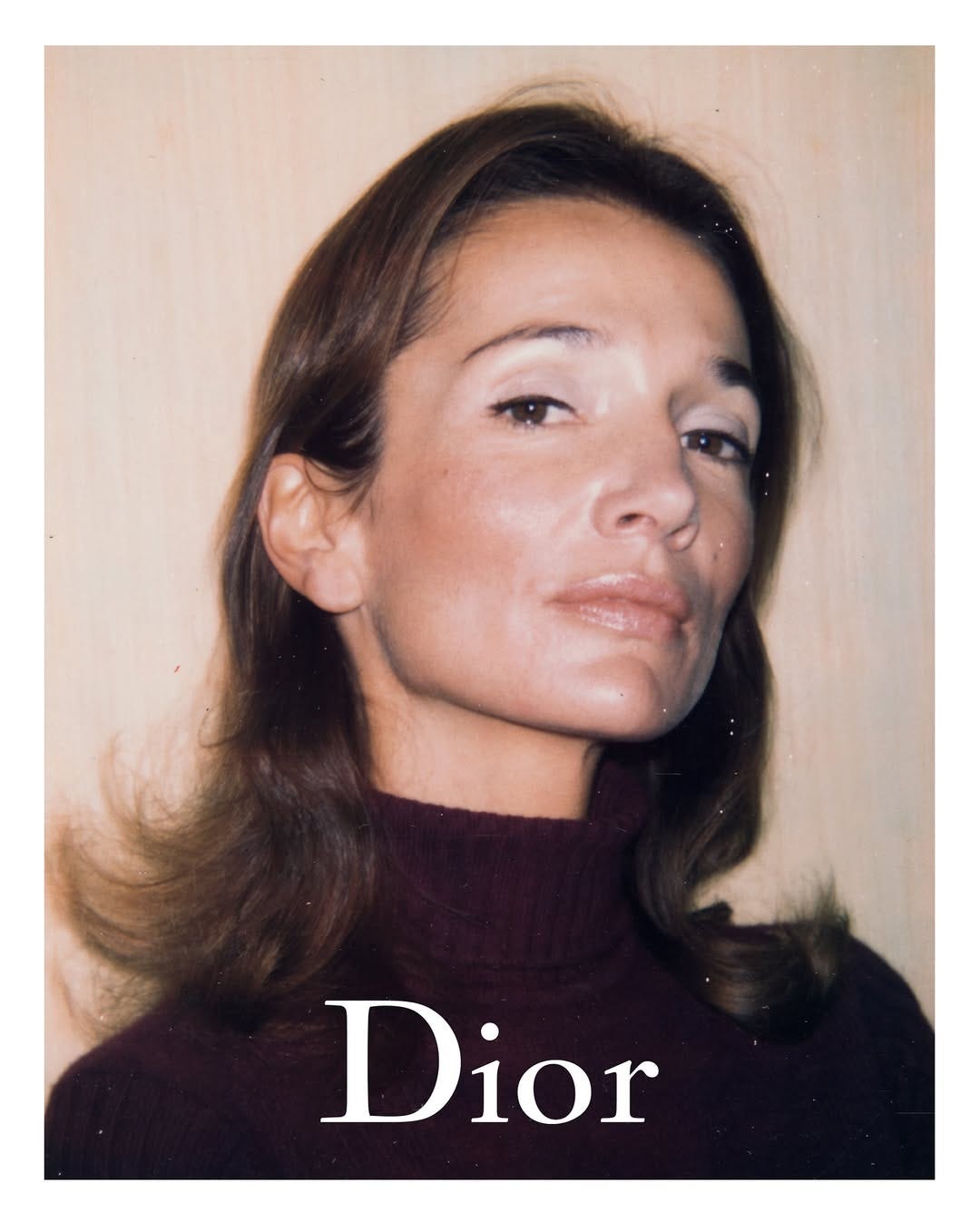
In the days before the show, Dior’s Instagram featured two Andy Warhol polaroids: one of Jean-Michel Basquiat, the other of Lee Radziwill. Anderson stated that both of these iconic figures come to mind when he thinks of fashion.
The Archival Pieces
Anderson pulled directly from Dior’s archive to shape the collection. See some examples below:
The Cyclone dress from 1951, held at the Met, inspired structural swirls in outerwear.
Cargo shorts were layered in a way that echoed Dior’s 1948 Winged Line.
Moiré fabric returned, with a touch more sculptural form.
Even accessories carried cultural weight:
Two books were played into the show, Les Liaisons Dangereuses and Dracula. One, French and seductive. The other, Irish and transformative. The latter subtly links to Anderson’s own heritage.


Fashion and art have always been intertwined, but it’s always exciting to see them references so literally. Let us know what you think in the comments!